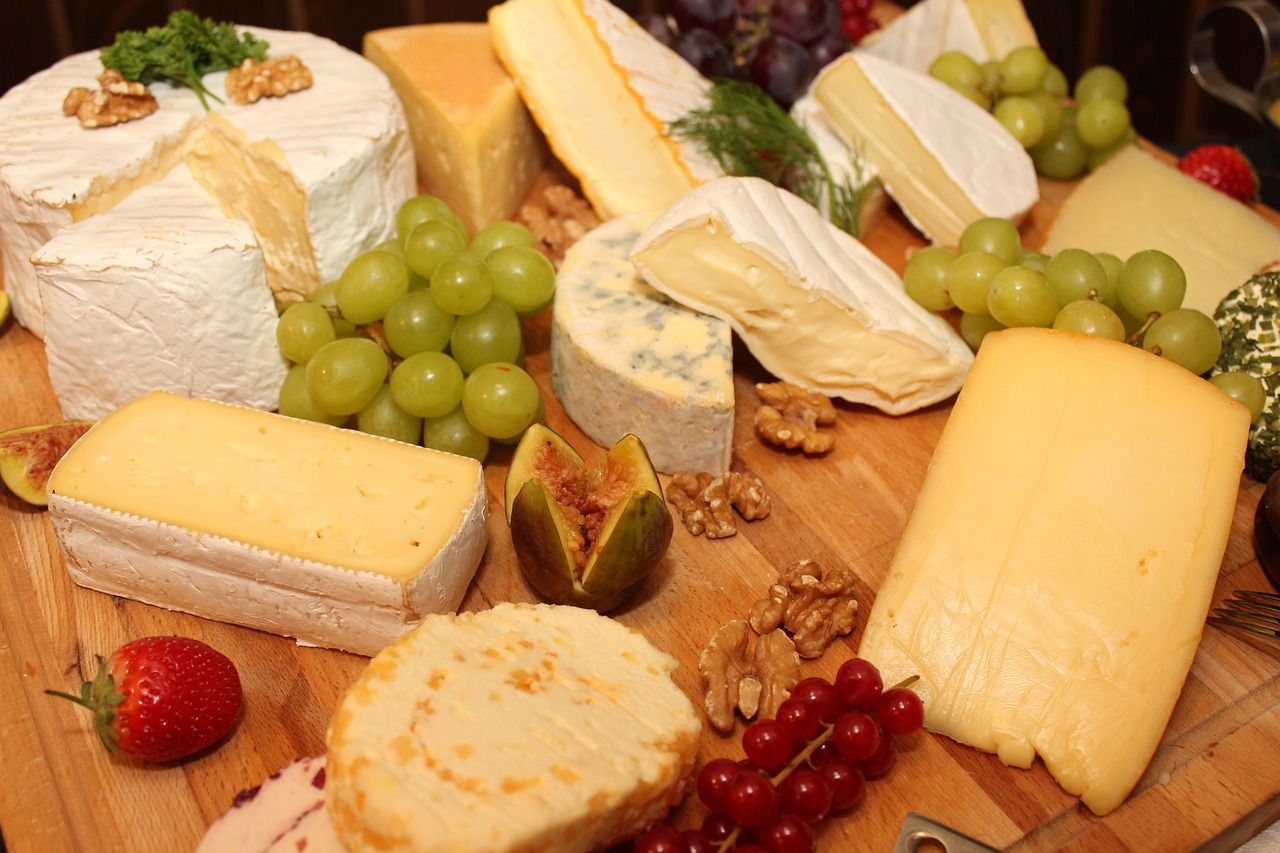
Changing our diets to eat less meat and dairy is the most impactful action anyone can take to tackle our most pressing environmental crises including climate change, deforestation and water use. This is because farming animals to produce meat and dairy is incredibly inefficient. If everyone in the world went vegan, we would free up land equivalent to the size of North America and Brazil. Just think how this could make space for nature, restore biodiversity, and offer us all more access to wilderness. It’s even been suggested that the climate crisis could be stopped in its tracks if we rapidly transitioned away from meat and dairy.
But – obviously – this is easier said than done. So much of our heritage, culture and identity revolves around eating meat and dairy and those who choose to abstain can feel isolated. When people hear ‘go vegan’, many think this means missing out on Sunday roasts, summer barbecues, Christmas dinner, etc. Which is where meat and dairy substitutes come in. Plant-based meats and cheeses can support people’s diet transition. Many of these are pretty good and getting better. I am certainly not averse to indulging in such treats in the context of my mostly wholefood diet.
However, a big stumbling block can be cheese. When I was considering going vegan, this is what most concerned me. I remember someone who had been vegan for a while telling me that she liked cheese so much her wedding cake was made of the stuff. Yet, when I asked her how she coped without, she said she no longer missed it. It just wasn’t a big deal. Unfortunately though, for many people it’s not that easy. It’s like they’re addicted to cheese. And, guess what, they probably are. On reflection, I think that giving up cheese may have given me a mild depression until my body got used to not having it. And many plant-based cheese substitutes don’t yet match up to dairy cheese.
It’s barriers like these that make it difficult to imagine most of the world renouncing meat and dairy quickly enough to meet the urgency of the environmental crises. Like it or not, most people are not environmental activists. And, frankly, even many of those who are find it hard fundamentally to change their diets.
Nevertheless, the production of dairy is hugely inefficient and polluting, with cheese especially bad for the environment. Dairy milk uses fourteen times as much land as soya milk, causes three times as many greenhouse gas emissions, and uses twenty-three times as much water. Other plant-based milks have similar stats compared to dairy. And, whilst dairy consumption is going down in some parts of the world, it’s still pretty much the norm in most households. Of course it’s not just dairy (and meat) that are fuelling our many environmental crises, but they are nevertheless a large part of the problem.
Making Dairy Without Animals
So what if we could still have dairy – real, actual dairy – but made without animals? Is it possible to have our (cheese) cake and eat it? This is where a technology known as precision fermentation comes in.
Fermentation involves microbes breaking down sugars and producing by-products useful to us. Humans have taken advantage of this process over thousands of years to make foods such as bread, wine, tofu and yoghurt. In recent decades, we’ve refined this to enable us to synthesise a wide range substances, including insulin for diabetics, the production of which no longer involves the slaughter of huge numbers of cows; citric acid as food ingredient, which used to be extracted from vast amounts of fruit; and vitamins for nutritional supplements. Even more recently, we have developed ways to manipulate microbes to produce just about any protein you can think of.
This is known as ‘precision fermentation’ and it has the potential to replace most – if not all – dairy products, such as milk, butter, cheese and ingredients routinely used in foodstuffs like cake, chocolate, ice-cream, crisps, cereals, protein bars, and so on. There are already companies manufacturing the proteins that constitute dairy (whey and casein), heme, which helps make meat meaty, and egg white. Other technologies, such as cultured meat, may help us grow animal-derived meat and fish, although this is probably further down the line.
Environmental Impact
But there is a big question to be addressed: is non-animal dairy made using precision fermentation better for the environment than animal-produced dairy? The answer appears to be yes.
The company Perfect Day makes animal-free protein for products sold in the US, including cream cheese, ice-cream, and milk. Perfect Day commissioned a third-party lifecycle assessment (LCA) to examine the environmental impacts of how their product is made from start to finish. The resulting LCA found that the global warming impact from Perfect Day’s whey protein was 91-97% lower than animal dairy equivalents, involved 29-60% less energy, and 96-99% less water. A Finnish company also using precision fermentation was found to have a reduced environmental impact of 53-100% when compared to the production of animal-based food protein according to their LCA.
Too Good to be True?
But is this all too good to be true? I’ve been a fan of precision fermentation for a while, evangelising about it to anyone who will listen(!). I think it could be a game-changer. However, a fellow member of our local climate action group recently mentioned a book they were reading that they said was a “fairly direct counterblast against precision fermentation”. This book is Saying NO to a Farm-Free Future by Chris Smaje (hence my blog title). Its subtitle is ‘The Case for an Ecological Food System and Against Manufactured Foods’.
Smaje’s motivation for writing the book was to push back strongly against George Monbiot’s ‘ecomodernist’ vision, which includes his advocacy for precision fermentation. In fact, it was Monbiot’s book Regenesis where I first came across precision fermentation, although I don’t think he did a particularly good job of promoting it. (In the end, it was Tony Seba who got me excited about its amazing potential.)
Smaje is vehemently against precision fermentation. For a start, he’s not convinced that becoming vegan will do that much for climate change. He writes:
I’m not suggesting that veganism is a bad consumer choice to make on climate grounds, or that it’s okay to keep snacking thoughtlessly from the meat plate of the existing agricultural system. But the numbers suggest that widespread adoption of veganism wouldn’t work as a major climate mitigation strategy. (Saying NO, p. 87)
Leaving aside that fact that the benefits of veganism go way beyond climate (as I discuss above), Smaje’s objection to precision fermentation is more fundamental than this. He develops his argument in both his book (which I reference below as SN), and in this document about energy costs, published on his website (which I’ll reference as EC).
Smaje suggests that precision fermentation is “hippy dreaming with a high-tech gloss” (SN, p. 12), “an early-stage field of speculative biotech and venture capital investment” (SN, pp. 24-25), “not yet … scaled up to industrial production levels” (SN, p. 25), and “completely fanciful as a way of feeding people en masse” (which is a quote from this blog).
Smaje maintains that precision fermentation is technically unfeasible because he has calculated that it requires a massive energy input of 65.3 kWh to produce one kg of protein (EC, pp. 1-2). He writes that this would mean that “to provide for all of humanity’s protein needs, you’d have to use more than nine times the entire world’s current solar electric supply” (SN, p. 39). (Incidentally, I don’t believe precision fermentation should be used to provide all of humanity’s protein needs. I for one like my lentils, beans, nuts, and soya, none of which, in case you were wondering, can be synthesised by this technology.)
Smaje’s figure draws on information from this published study. He says that this paper doesn’t include an energy estimate but that it’s “possible to calculate one from the data provided” (EC, p. 1). Smaje uses his derived figure to dismiss the much lower one that Monbiot quotes of 16.7 kWh/kg protein, which, he says, Monbiot is unable to justify satisfactorily. In fact, Smaje claims that the theoretical maximum efficiency of precision fermentation is 17.8 kWh/kg, citing this paper (EC, p. 2). (This somewhat fractious to-and-fro between Smaje and Monbiot is summarised in this article.)
Or Maybe Not?
If Smaje’s findings are correct, they would pour very cold water indeed on my enthusiasm for precision fermentation. However, I’m not sure that his argument is well-founded.
For a start, I don’t understand why Smaje felt the need to calculate his energy estimates for making precision fermented proteins when actual figures are available from real-world production. These can be found in the LCAs I quoted from above. The LCA for Perfect Day reports a figure of 13 kWh/kg protein (p. 23), and the LCA for the Finnish company reports a figure of 18 kWh/kg (p. 10). These are both well below Smaje’s estimate of 65.3 KWh/kg. (Smaje is aware of this second LCA but dismisses its energy figure as an assumption that “may be unachievable in real life on an average hourly production basis” [EC, p. 2]. However, the paper makes clear that it’s an actual measurement of [small-scale] production and not an assumption.)
I confess that I couldn’t follow Smaje’s workings in calculating his figure of 65.3 kWh/kg and I don’t have expertise in biotechnology. However, I find it odd that he draws his conclusions from two papers that seem broadly sympathetic to precision fermentation. In the abstracts of the papers he references, the first states that it “offers an assessment of the future potential of photovoltaic-driven microbial foods to supplement conventional agricultural production and support resource-efficient protein supply on a global scale”. And the second that it “provides a roadmap for development of engineered microbes that could significantly expand access to proteins produced with a low environmental footprint”.
Agroecology AND Precision Fermentation?
I actually like a lot of what Smaje is proposing. I believe small-scale ecologically-focused farming has the potential to play an important part in a post-fossil fuel world. But I also believe that precision fermentation offers a transformational and achievable near-time part-solution to our current predicament. Ultimately, I think the two solutions could go hand-in-hand. There is room for both and we frankly need everything we’ve got if we’re going to evolve our world into one that is truly sustainable.
Smaje invites people to let him know if they believe he’s in error, so I’ll be doing just that. I’ll update this post with how he responds if and when he does so. If it transpires that it’s me (and Monbiot) who are in error, then I’ll just have to eat humble pie. Plant-based and precision-fermentation-free of course.
Update
Chris Smaje did indeed respond to my suggestion that he was in error in this blog post. You can have a read yourself, but, in essence he stands by his original claims about the high energy needs of precision fermentation, and similar technologies. As for me, well I do indeed need to eat that humble pie. Here’s my response to his blog. It’s available as a comment on his blog, but I thought I’d post it here too in context (with a few minor edits to correct typos and similar):
Let me issue a mea culpa. Chris – you’ve persuaded me that you are broadly correct in your energy estimates and my criticism was unfounded. The clincher for me was Perfect Day’s own LCA which does (as you point out) state that their energy use is based only on the whey-equivalent protein and not on their entire output. This is somewhat hidden in their document and I missed it. (I feel like I’ve had a public peer review!) I agree that this presentation is misleading. Whilst the LCA says that Perfect Day’s by-product might be useful in other domains, such as making synthetic leather, this feels like speculation to me.
However, I still feel that precision fermentation could play a role, at least as a transitional technology.
Firstly, it is possible that renewable energy from wind, solar, and batteries might become superabundant because of the need to overprovision generating capacity to account for times of the year when there is no wind or sun. This would mean that most of the year there is plenty to spare. (This is another argument made by Tony Seba.)
Secondly, there are numerous other (I think undisputed) advantages of precision fermentation over industrial animal farming, such as a significantly reduced need for freshwater and chemical inputs, a much lower land footprint, no need for antibiotics, and much less pollution (Wye Valley and chicken farms, anyone?). To say nothing of the eradication of the horrendous suffering of animals endured because of society’s desire for ‘cheap’ meat and dairy.
I’d also like to thank Chris for acknowledging the need for substantial reductions in meat and dairy in any truly sustainable system. This is important to stress as it feels to me that some commentators who advocate for animals to be involved in farming systems miss this (or gloss over it).
And so I wonder whether our differences may lie in differences in perspective? I am attracted by precision fermentation as a way to get from the current exploitative and unsustainable food system to somewhere less exploitative and more sustainable. If nothing else, it could buy us time. Perhaps Chris and supporters who’ve commented on this are viewing this technology from a vision of a world where all our food needs are met through agroecology and similar systems? In which case, it’s perhaps not surprising that a technology associated with labs and food companies who are part of the problem is viewed as anathema. (Yes, I do get that!)
Finally, thank you Chris for acknowledging my ‘good-natured tone’. It’s depressing to think that we can’t expect that from everyone, but of course this doesn’t always happen. In the end, even if we differ in some of our viewpoints to lesser or greater extents, we need to remember that WE ARE ON THE SAME SIDE. That is, the side that is working for a truly sustainable future for our planet. And some humility is required because, as I so clearly showed, we can’t always be right.
Thanks for hosting me and thanks for the constructive dialogue.